
· Engineering notes
Playwright flake quarantine in CI
When the PR gate flakes, teams stop trusting red. Use a dated quarantine policy, keep traces on failure, and ban waits that hide races - without turning skip into the default.
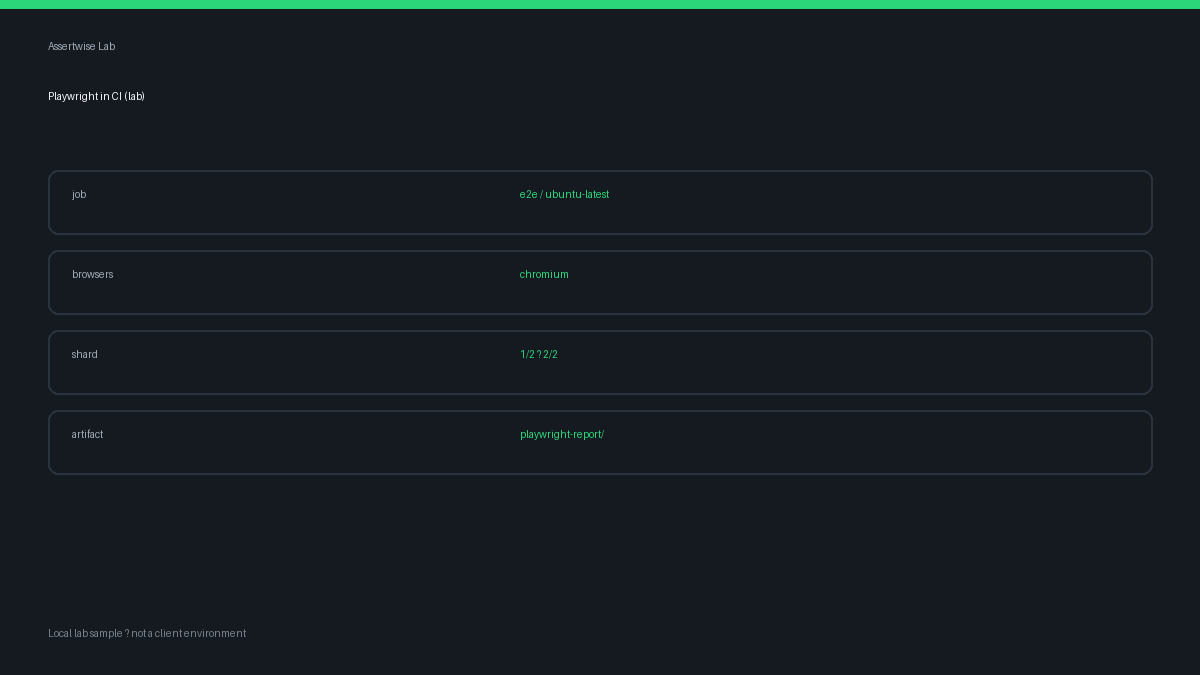
When the gate still fails but nobody trusts it
You already have a Playwright job on every PR. The failure mode that kills trust is not "no tests" - it is a red check that the team re-runs until green. Fix the policy before you add more scenarios.
This post assumes you have a fail-closed skeleton (config + GitHub Actions). If you do not, start with Playwright testing on every PR.
Artifact: quarantine decision table
For each flake ticket, pick exactly one row. Do not invent a fourth state called "we will watch it".
| Signal | Action | Gate behaviour | Exit criteria |
|---|---|---|---|
| Fails >1 in last 10 PR runs on mainline path; root cause known (<1 day fix) | Fix now in the same PR or a blocker PR | Stay red until fixed | Green on 3 consecutive PR runs + one main run |
| Fails intermittently; root cause unknown; blocks unrelated PRs | Quarantine with ticket + owner + date | Excluded from required job; still runs in a non-blocking job | Ticket closed with fix or delete within 10 working days |
| Asserts something the product no longer promises | Delete the test | Removed from suite | Changelog note; no silent skip |
Quarantine is a dated exception, not a parking lot. If the ticket ages past the exit date, the non-blocking job should fail the build until someone decides fix or delete.
Fail-closed quarantine (do not silent-skip)
- Tag the test:
test.describe.configure({ tag: '@quarantine' })or a project that filtersgrepInvert: /@quarantine/on the required job. - Keep a second workflow job
e2e-quarantinethat runs only@quarantine, uploads artifacts, and is not required for merge. - Fail the required job if a quarantine tag has no open ticket ID in the test title (example:
@quarantine TICKET-1842). - Never use
test.skip(true)without a ticket ID in the reason string.
// playwright.config.ts (required project)
projects: [
  {
    name: 'pr-critical',
    grepInvert: /@quarantine/,
    use: { ...devices['Desktop Chrome'] },
  },
]
Traces and HTML report only when useful
Always-on traces slow CI and bury signal. Use Playwright's recommended CI pattern: retain trace on failure, publish the HTML report as an Actions artifact.
# .github/workflows/e2e.yml (excerpt)
- name: Run Playwright
  run: npx playwright test --project=pr-critical
  env:
    PLAYWRIGHT_HTML_REPORT: playwright-report

- name: Upload report on failure
  if: failure()
  uses: actions/upload-artifact@v4
  with:
    name: playwright-report
    path: |
      playwright-report/
      test-results/
    retention-days: 14
In config: trace: 'on-first-retry', retries: process.env.CI ? 1 : 0. One retry is for network blips; two or more usually hides a real race. Official docs: test retries, trace viewer, CI guide.
Forbidden waits checklist
- Ban
waitForTimeoutin new tests (lint or PR checklist). Preferexpect(locator).toBeVisible()/toHaveURL/toHaveResponse. - Ban naked
page.waitForLoadState('networkidle')on SPAs that keep websockets open - it flakes by design. - Prefer role + name locators over CSS that mirrors implementation class names.
- Seed data in
beforeEachvia API; do not click through setup that other tests already cover. - If a flake needs "sleep 2s" to pass, quarantine it and fix the race (missing await, animation, or shared account).
When this policy fails
Quarantine does not help if half the critical path is tagged. Cap quarantined tests (for example 2 on a 12-test gate). Above the cap, stop merging features until the oldest quarantine is closed. Also: comparing frameworks will not fix flakes - keep Selenium only when you must; see Playwright vs Selenium.
Related: wire suites into your repo under Test Automation & CI.
If you want this policy applied to your critical path, book a free 20-min test audit - leave with the three highest-risk flake sources on that path.